
For book clubs
Make Mahala your next book club read
A short, propulsive family saga with a true story at its heart, a heroine worth arguing about, and a real history to dig into together.
Free for book clubs
Everything your club needs
All of it free, and none of it conditional on how many copies you buy or where you buy them.
The discussion guide
Nine questions written by Carol, free to print and safe to hand out before anyone has finished the book.
Thirty minutes with Carol
She joins your meeting by video, answers whatever you throw at her, and stays for the tangents. No fee, and no minimum club size.
The real history
Ship manifests, photographs, the family stories that did not fit in the novel. Clubs often spend as long on the true version as on the book.
Why Mahala
Made for a good discussion
Everyone finishes it
Forty-five brisk chapters and a story that pulls. Even the busiest members will have read it by meeting night.
A heroine to argue about
Mahala’s choices split a room in the best way. Every reader takes a side, and nobody stays quiet.
Real history to explore
A Caribbean girlhood, an indenture crossing, the garment-district union. Plenty to look up together after the last page.
The discussion guide
Questions to get you started
Nine questions, free to use and safe to read before you finish the book.
- Mahala is raised next door to her biological siblings, by a different mother. How does growing up given away, but in full view, shape who she becomes?
- Four parents share one plan for Mahala’s life. Where do you see their love and their control tangled together?
- At thirteen, Mahala refuses the husband chosen for her. What does the refusal cost her, and her family? Would you have had her nerve?
- The story moves from colonial St. Vincent to New York’s garment district. How does each place offer Mahala freedom, and take something from her?
- Mahala says she just feels like she lost something. What do you think she means, and does she ever find it again?
- Motherhood takes many forms in this story, and not all of them look like love. Which mother did you understand most, and which did you judge?
- Mahala becomes an advocate for the women she works beside. Where do the first seeds of that courage appear?
- The story is true. Does knowing that change how you read Mahala’s choices, or how you feel about where she ends up?
- The book asks where women get their nerve. Where does yours come from?
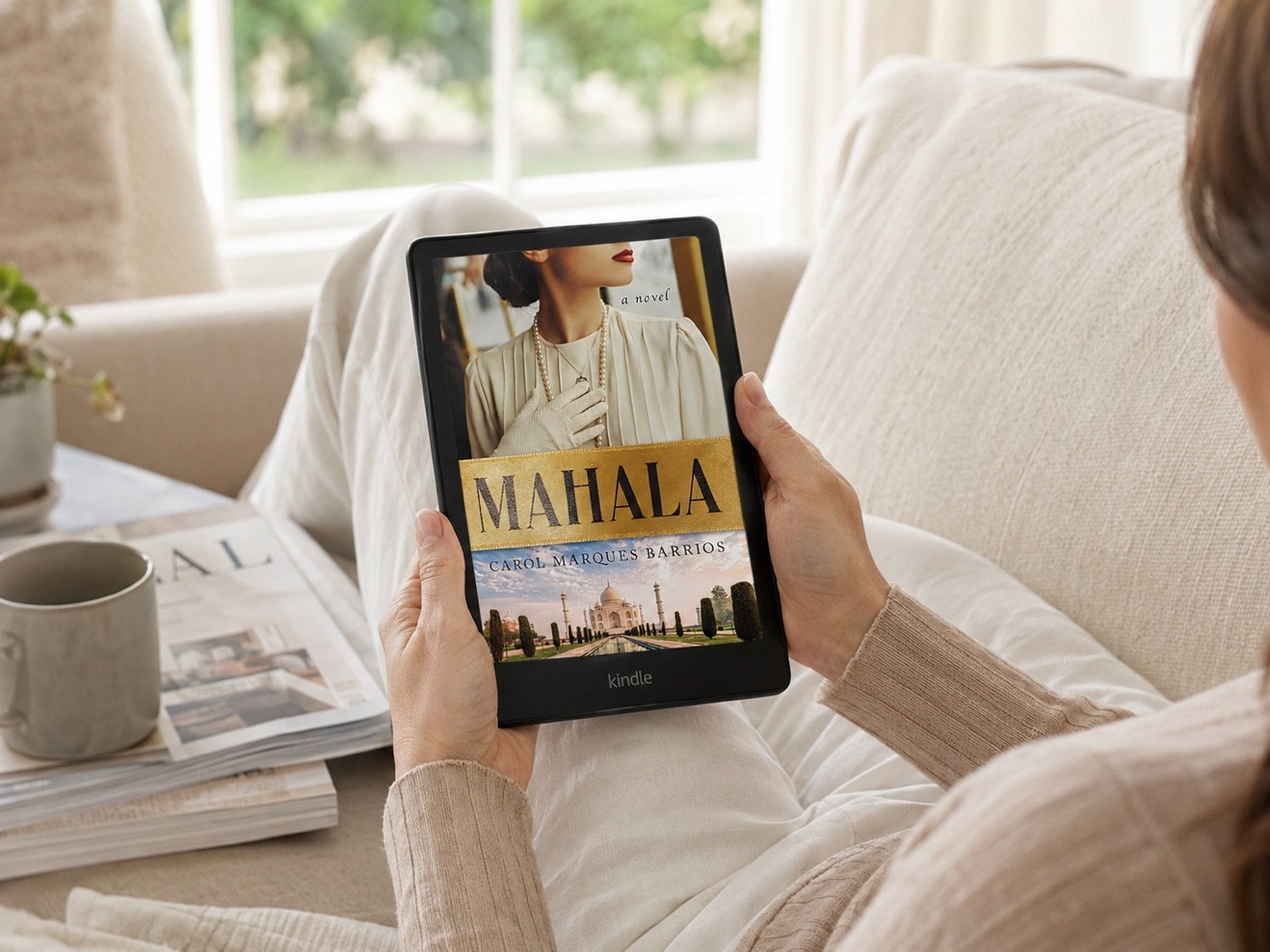
A visit from the author
Carol will pop into your meeting
Carol loves joining book clubs by video for a friendly, no-pressure conversation: roughly thirty minutes of questions, stories from the real Mahala’s life, and the parts that did not fit in the book. It is free, and it is one of her favourite things to do.
Before you read
Content Note
Mahala is suitable for adult and older-teen readers and for library and book-club programming. It opens on recurrent miscarriage and infertility grief, and its heart is a child given away by agreement between two families. There is no on-page sexual content, no graphic violence, and no profanity of note.